Does a Sedona Vacation Rental Need Real Insulation? The Hidden Cost of Under-Insulated Short-Term Rentals in Red Rock Country
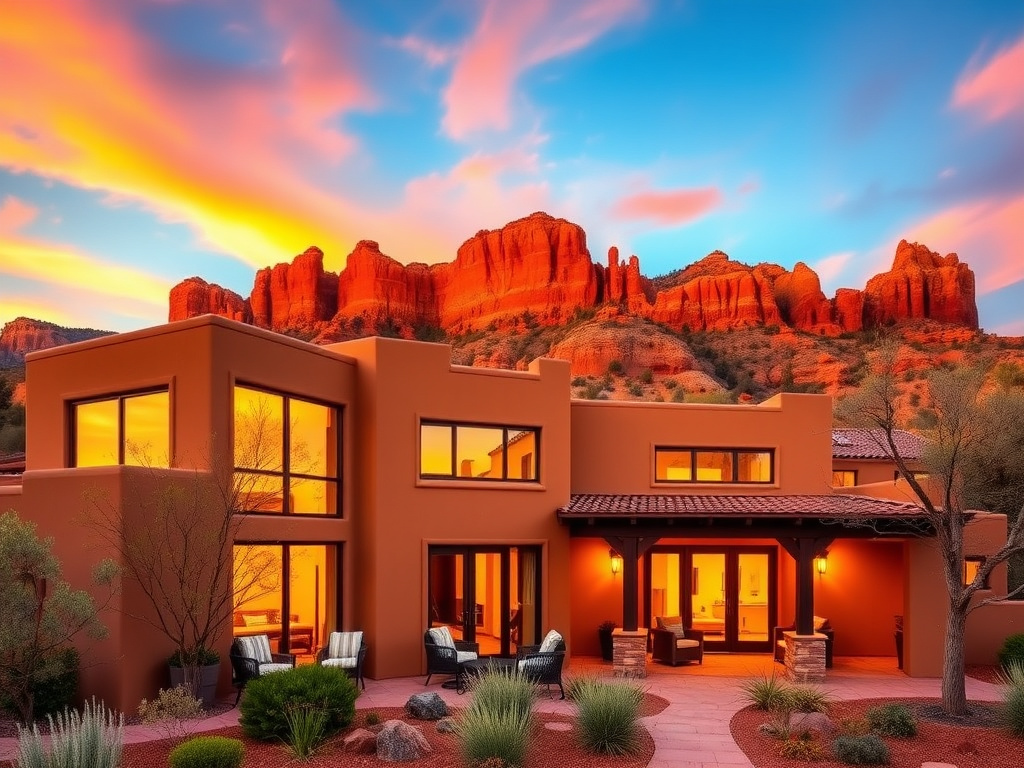
Sedona sits at roughly 4,500 feet — the mildest and lowest of our four core Northern Arizona towns, and the only one of the four where a full desert-heat, high-desert framing genuinely applies alongside real winter cold. Sedona still gets freezing nights and light winter snow; it just doesn't carry the alpine winter identity of Flagstaff or Williams. What Sedona does have that none of our other towns do is scale in the short-term rental market: roughly 1,600 to 1,800 active listings, with average nightly rates of $400 or more. That density and price point change the insulation conversation entirely, because the person paying the heating and cooling bill usually isn't the person standing in the room when the thermostat feels wrong.
A Different Kind of Owner Problem
A homeowner living in their own Sedona house feels a cold draft or a stuffy upstairs bedroom directly, and fixes it or lives with it on their own terms. A vacation rental owner usually doesn't. Guests cycle through every few nights, the thermostat gets adjusted by people who've never been in the house before, and the owner typically finds out something was wrong only after the fact — through a review, a message during the stay, or a utility bill that doesn't match expectations. An under-insulated unit doesn't announce itself to the owner. It shows up in someone else's stay.
Where This Shows Up in Guest Reviews
At $400-plus average nightly rates, Sedona guests are paying premium prices and have premium expectations. A unit that runs cold overnight, has a bedroom that never quite reaches a comfortable temperature, or requires guests to fight with the thermostat all night is exactly the kind of detail that turns into a specific, damaging line in a review — the kind that costs future bookings in a way a single bad night doesn't fully capture. Drafts, cold floors, and rooms that won't hold a set temperature usually trace back to the same root causes as they do in an owner-occupied home: under-insulated attics and walls, and unsealed air leaks at rim joists, can lights, and penetrations. The difference is that in a rental, the person who could report the problem clearly to a contractor is a guest who's already checked out.
The Energy Bill an Owner Never Watches Closely
Most Sedona STR owners aren't living in the property day to day, and many aren't checking utility usage the way they'd watch it in their own home. That creates a real gap: an under-insulated unit runs the HVAC system harder to maintain guest-set comfort, and because the owner isn't the one paying attention room to room, that inefficiency can run for months or years before anyone connects the dots. It shows up as a utility bill that's simply higher than it should be for the square footage — not usually as an obvious, single event an owner would notice and investigate.
The ROI Case: Fixing It Between Bookings
Short-term rentals have a scheduling advantage a full-time residence doesn't: gaps between bookings, especially in shoulder-season stretches, when insulation and air-sealing work can happen without displacing a paying guest or disrupting a booking calendar. Attic insulation, crawlspace work, and rim-joist air sealing are all interior/attic-focused projects that can typically be scheduled tightly around a vacancy window rather than requiring the property to sit empty on the owner's dime for an extended renovation.
- Lower recurring utility costs on a property the owner isn't occupying to notice drafts or overuse.
- Fewer comfort-related guest complaints and negative review mentions tied to temperature.
- Work scheduled around existing vacancy windows rather than displacing paying guests.
- Interior and attic-focused work generally doesn't require exterior changes — a meaningful point in Sedona, where many premium neighborhoods layer HOA architectural review and the town's dark-sky lighting ordinance on top of any visible exterior renovation.
That last point matters more in Sedona than almost anywhere else in our service area. A significant share of Sedona's rental stock sits inside HOA-governed neighborhoods with architectural review committees, and the town has tightened its outdoor lighting rules under its dark-sky ordinance. Insulation work — attic, crawlspace, wall cavity, rim joist — doesn't change how the property looks from the street or from a neighbor's window, which means it generally sidesteps the exterior-approval process that a visible renovation would trigger. For an owner trying to improve a rental without opening an HOA review process, that's a real practical advantage.
What Actually Needs Attention in a Sedona Rental
Sedona sits in the milder Zone 4B tier of our two-tier service area, so the target here isn't Flagstaff's R-49–R-60 attic — it's generally R-38 to R-49, still well above a low-desert Phoenix target, because Sedona genuinely does get cold nights even though its winters are shorter and milder than Flagstaff's or Williams's. For a rental specifically, the priority areas tend to be the attic, any crawlspace or under-floor area, and rim joists and penetrations where guest-facing comfort complaints most often originate — the same areas that matter in an owner-occupied home, just with a different owner attention gap driving the case for fixing them.
If you own or manage a short-term rental in Sedona and want a straightforward look at where it's losing comfort and money between bookings, call 844-967-5247 or email josh@contractorschoiceagency.com. We'll tell you plainly what's driving guest complaints or utility costs and how to schedule the fix around your booking calendar, not around ours.
Frequently asked questions
Yes. Sedona is the mildest of our four core towns at roughly 4,500 feet, generally in IECC Climate Zone 4B, but it still gets freezing nights and light winter snow. The general attic target is R-38 to R-49 — well above a low-desert Phoenix home, even though Sedona's winter is shorter and milder than Flagstaff's or Williams's.
Indirectly, yes. Drafts, cold rooms, and inconsistent temperatures at premium nightly rates are exactly the kind of detail guests call out in reviews. Those issues usually trace back to under-insulated attics or walls and unsealed air leaks, the same root causes as in any home.
Attic, crawlspace, and wall-cavity insulation work is interior/attic-focused and doesn't change the property's exterior appearance, so it generally doesn't trigger the HOA architectural review process that a visible renovation would in Sedona's HOA-governed neighborhoods. Confirm specifics with your HOA if you're unsure about your property's rules.
Between bookings, ideally during a shoulder-season vacancy window, so the work doesn't displace paying guests or require blocking off the calendar specifically for the project.
Ready for a free quote?
Tell us about your home and we'll build a clear quote — rebates included.