Spray Foam Insulation in Northern Arizona
The highest R-value per inch and a true air seal in one step — the strongest single upgrade available for a Northern Arizona home, from a 7,000-foot Flagstaff winter to a milder Sedona night.
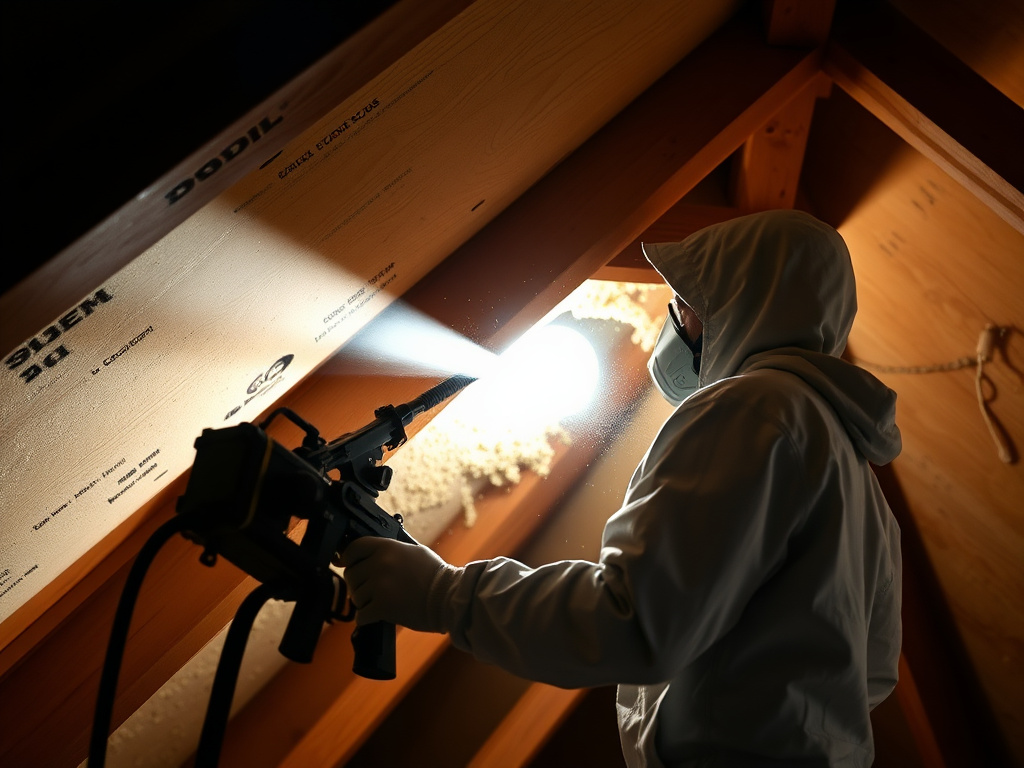
Northern Arizona isn't one climate — it's two. Flagstaff and Williams sit near 6,750–6,910 feet in genuine IECC Climate Zone 5B territory, with winters that drop well below freezing for months and Flagstaff alone averaging around 81 inches of snow a year. Prescott and Sedona are milder Zone 4B country at 5,400 and 4,500 feet, with real winter nights but a shorter, gentler cold season. Spray foam earns its place in every one of these towns for the same reason: it's the only insulation product that insulates and air-seals in a single application, expanding to fill every gap around wiring, plumbing, and framing so conditioned air stays inside and outside air stays out — whether that's a Flagstaff attic fighting a seven-month heating season or a Sedona rim joist dealing with a colder-than-expected desert night.
We install both open-cell and closed-cell spray foam, and we spec each job to the house and the town, not a one-size pitch. A Williams cabin rim joist exposed to wind-driven snow gets a different recommendation than a Sedona crawlspace or a Prescott Victorian's stud-bay retrofit. Whether you're sealing a rim joist, finishing a crawlspace, insulating a vaulted ceiling, or upgrading a full attic, we match the product to the application so you get real performance without paying for capability your home and climate zone don't need.
Why homeowners choose it
- The highest R-value per inch of any common insulation product
- Air-seals and insulates in a single application — no separate air-sealing pass required
- Stops warm indoor air and cold drafts from trading places through gaps and cracks
- Won't sag, settle, or compress the way loose-fill and batts can over time
- Adds real structural rigidity at rim joists and band areas prone to wind infiltration
- Scales to both a Flagstaff Zone 5B attic and a milder Prescott or Sedona Zone 4B retrofit
Open-cell vs. closed-cell spray foam across a two-tier climate
Open-cell and closed-cell foam do different jobs, and the right call shifts depending on where in Northern Arizona you're building. Open-cell foam is lighter, expands more per board foot, and delivers a strong air seal at a lower cost per square foot — a solid value pick for a straightforward attic in Prescott or Sedona's milder Zone 4B climate. Closed-cell foam costs more, delivers a higher R-value per inch in a shallow cavity, and acts as a genuine moisture and vapor barrier — an advantage that matters more in Flagstaff and Williams, where heavy snow load, freeze-thaw cycles, and roof-deck condensation risk are a real, recurring part of the winter.
Rim joists, crawlspace walls, and any spot exposed to snow-melt moisture are where we lean toward closed-cell, especially in the Zone 5B towns. In Prescott and Sedona, where the winter is real but shorter and milder, open-cell often does the job at a better price. We assess each part of your home and its elevation rather than pushing one product everywhere, so your budget goes toward the performance that actually matters for your specific town.
- Open-cell — strong air seal, lower cost, solid pick for Zone 4B attics in Prescott and Sedona
- Closed-cell — highest R-value per inch, adds rigidity, true moisture barrier for Zone 5B snow country
- Flagstaff and Williams rim joists and crawlspaces lean closed-cell for the vapor-barrier advantage
- We spec each area on its merits and its climate zone, not a one-size-fits-all pitch
Why the combination matters at altitude — from Flagstaff to Sedona
On a Flagstaff or Williams night in the teens, every unsealed gap around a top plate, recessed light, or plumbing penetration lets heated air leak straight out, forcing a furnace or heat pump to run nonstop just to keep up. Because spray foam insulates and seals at once, it attacks both problems together: slowing conductive heat loss through the attic floor or rim joist while cutting off the air pathways that let cold air infiltrate. Prescott and Sedona homeowners see the same effect at a smaller scale — a milder winter still means real overnight lows in the 20s and 30s, and an unsealed home still runs its heating system longer than it should.
In Flagstaff specifically, air-sealing the attic floor with spray foam also helps prevent one of the region's most common cold-climate insulation failures: ice dams. A poorly sealed, warm attic melts roof snow unevenly, which refreezes at the eaves and can force water back under shingles. Keeping heat where it belongs — inside — is the first line of defense.
A clean, professional installation built for real Northern Arizona winters
Spray foam has to be installed at the right thickness, ratio, and substrate temperature to cure properly and perform for the life of the home — and working around cold job-site conditions at 5,000 to 7,000 feet makes that discipline more important, not less. Our crews mask and protect the work area, verify conditions before spraying, apply foam to spec, and trim and clean up so the finished job is ready for drywall, ductwork, or simply closing up the attic hatch before the next storm. Correct installation is the difference between foam that performs for decades and foam that underdelivers — and it's what separates a professional crew from a weekend applicator.
Ideal for
- Rim joists and band areas losing heat to Flagstaff or Williams wind and snow load
- Vaulted or cathedral ceilings in log homes and cabin construction with limited insulation depth
- Crawlspaces where a frozen pipe is a real winter risk, from Munds Park cabins to Prescott ranch homes
- Homeowners who want the maximum efficiency upgrade available, in any of the four core towns
- Additions and rooms that never hold heat through a cold snap, regardless of elevation
What affects the cost
Spray Foam Insulation questions, answered
For attics, rim joists, and crawlspaces, yes — spray foam's combination of high R-value and a built-in air seal directly targets the two things that drive up a heating bill at 6,700–6,900 feet: conductive heat loss and cold air infiltrating through gaps. Most homeowners in the Zone 5B towns notice a real drop in furnace or heat-pump runtime the first winter.
It's still a real winter — Prescott nights commonly sit in the 20s to 30s, and Sedona gets freezing nights and occasional light snow too. Spray foam still delivers the same air-sealing benefit in Zone 4B homes; it's simply a smaller heating season than Flagstaff or Williams, so the payback math and product choice can look a little different.
For a standard attic in Prescott or Sedona, open-cell is often the better value. At Flagstaff and Williams rim joists, crawlspaces, and anywhere snow-melt moisture is a factor, we lean toward closed-cell for its vapor-barrier advantage.
Yes, particularly relevant in Flagstaff and Williams. Ice dams form when heat leaking from your living space melts roof snow unevenly, which refreezes at the colder eaves. Spray foam's air-sealing action keeps warm indoor air from leaking into the attic and warming the underside of the roof deck.
Yes. Once properly installed and fully cured, spray foam is inert and safe. Correct ratio, thickness, and cure time — done by a trained crew — is what ensures a clean cure, which is exactly why professional installation matters.
Spray Foam Insulation done right, by a local Northern Arizona crew
Spray Foam Insulation isn't a commodity — the result depends entirely on how carefully it's planned and installed for your specific home and a genuine high-elevation Northern Arizona winter. We assess what your house actually needs, prep the space properly, and install to your target R-value, so the work delivers the comfort and heating savings it's supposed to. No shortcuts, no builder-grade rush.
We serve Flagstaff, Prescott, Prescott Valley, Sedona, Williams, and the surrounding Coconino and Yavapai County high country, and we'll help you check the UniSource Energy and local weatherization rebates that bring your project cost down. Every job starts with a free, no-pressure quote.
Just as important, we treat your home like the system it is. Insulation, attic ventilation, and air sealing all interact, and getting one right while ignoring the others leaves comfort and savings on the table. When we scope your spray foam insulation, we look at how it fits the whole picture — so the finished result performs the way it should, holds up through a real high-elevation winter, and actually lowers the heating bill you feel every month. That whole-home mindset, plus honest advice about what your house truly needs, is what our neighbors across Northern Arizona count on us for.
Free assessment
We evaluate your home and give you a clear, itemized quote with rebates factored in.
Expert install
We prep and install your spray foam insulation to spec — clean and on schedule.
Savings you can feel
A warmer home, lower heating bills, and help claiming every rebate you qualify for.
Related services
Ready for a free spray foam insulation quote?
Tell us about your home and we'll put together a clear, no-pressure quote — plus walk you through the weatherization rebates you may qualify for.