Batt & Roll Insulation in Northern Arizona
Fiberglass and mineral wool batts installed in stud-bay walls, floors, and attics — a cost-effective, code-compliant baseline for new construction, additions, and any accessible cavity across Flagstaff, Prescott, Sedona, and Williams.
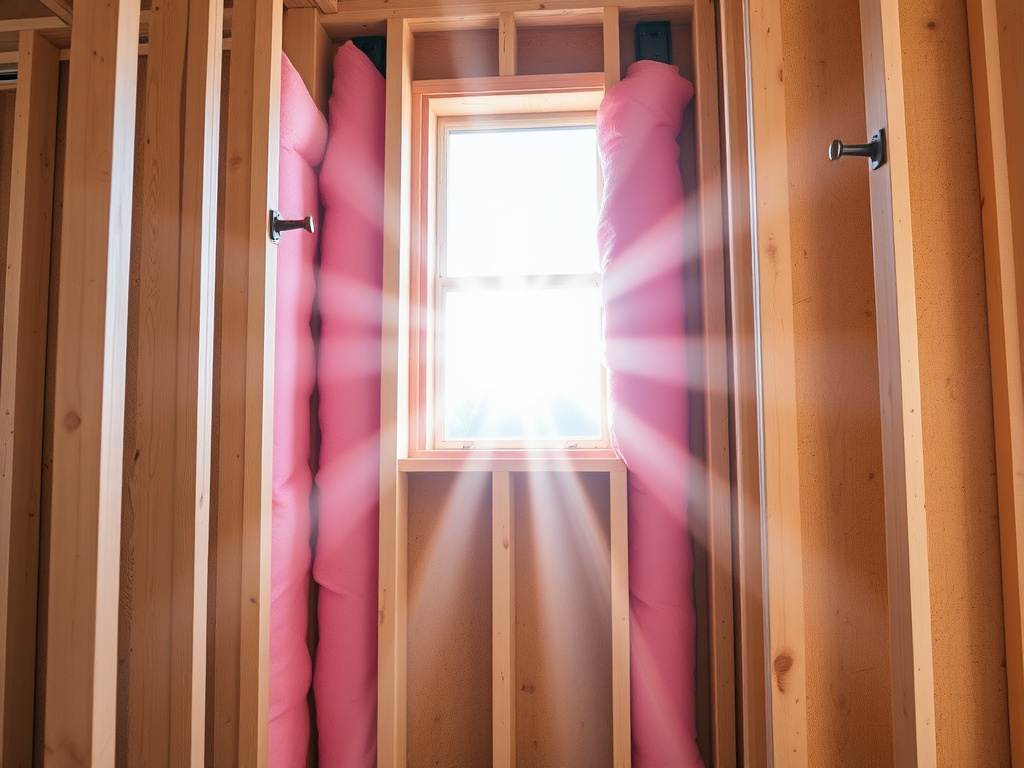
Not every insulation job needs the highest-performance product on the market — sometimes the right call is the well-understood, cost-effective standard that's been the backbone of residential construction for generations. Fiberglass and mineral wool batts remain the most economical way to insulate an open, accessible stud-bay wall, floor, or attic joist bay, and for new construction and additions across our service area, they're often the most practical way to meet code without inflating the budget. The target itself shifts by town — Flagstaff and Williams builders are generally working toward a Zone 5B wall assembly (roughly R-20 cavity, or R-13 plus continuous insulation), while Prescott and Sedona builds fall under Zone 4B (roughly R-13 to R-20 cavity). The catch with batts anywhere is that performance lives or dies on installation quality — a batt that's compressed, gapped, or cut around a wire instead of notched loses R-value fast.
We install both standard fiberglass batts and mineral wool depending on the application. Fiberglass is the cost-effective default for most open framing. Mineral wool costs more but holds its shape better in irregular cavities, resists fire, and performs a little better against sustained cold — worth the upgrade on Flagstaff and Williams builds in particular. Either way, our crews cut and fit every bay properly — full coverage, no compression, no gaps around outlets, junction boxes, or wiring — because that's the difference between a batt job that hits its rated R-value and one that quietly underperforms for the life of the house.
Why homeowners choose it
- Lowest material cost per R-value for accessible, open stud-bay walls
- Straightforward, fast installation in new construction and additions
- Mineral wool option adds fire resistance and holds shape in irregular cavities
- Meets Zone 5B (Flagstaff/Williams) or Zone 4B (Prescott/Sedona) wall targets when installed correctly
- A natural complement to attic and rim-joist upgrades on new builds
- A well-understood, code-familiar product for local inspectors and permitting
Fiberglass vs. mineral wool batts across two climate zones
Standard fiberglass batts are the cost-effective default, and for most new-construction walls in standard framing, they get the job done at a price that keeps a project on budget — in either climate zone. Mineral wool (rock wool) costs more per square foot but brings real advantages in a genuinely cold climate: it holds its shape and density better in irregular or tightly packed cavities, it's naturally fire-resistant, and it performs a bit more consistently in the sustained cold Flagstaff and Williams see for months at a time.
For most standard-framed walls in Prescott or Sedona, fiberglass is the practical choice. For Flagstaff and Williams builds — or where a cavity is irregular or fire resistance matters more — mineral wool is worth the upgrade. We'll spec it based on the specific wall and its zone, not a blanket recommendation either way.
- Fiberglass batts — cost-effective, standard performance, fast installation
- Mineral wool — better shape retention, fire-resistant, stronger cold-climate performance
- Flagstaff/Williams walls target roughly R-20; Prescott/Sedona walls target roughly R-13–R-20
Where batt insulation makes sense — and where it doesn't
Batts work best in open, uniform, unobstructed framing — which is exactly what you get in new construction and additions before drywall goes up. They're fast to install correctly in that setting because every stud bay is the same standard dimension and there's nothing already in the way.
Batts are a poor fit for retrofitting an older, finished wall — common in Prescott's historic core or Flagstaff's older neighborhoods. Existing walls are full of wiring, blocking, and irregular cavities that make a clean batt install nearly impossible without opening up the drywall, which is why we generally recommend blown-in dense-pack insulation for that kind of retrofit instead, and reserve batts for new construction, additions, and accessible unfinished spaces.
Installation quality is everything with batts
A batt's rated R-value assumes a full, uncompressed fit with no gaps — and that's easy to get wrong. Batts stuffed around a wire instead of split and notched around it, batts compressed to fit a cavity that's slightly too narrow, or batts left with a gap at the top or bottom of the bay can all lose a meaningful chunk of their rated performance without it being visible once drywall goes up. For Zone 5B wall assemblies in Flagstaff and Williams that call for continuous exterior insulation alongside the cavity batts (the R-13+5ci approach), we make sure both layers are installed as a coordinated system rather than treating the exterior insulation as an afterthought.
Ideal for
- New home construction and additions in Flagstaff, Prescott, Prescott Valley, Sedona, and Williams
- Garages, workshops, and outbuildings being finished for the first time
- Open, accessible stud-bay walls before drywall goes up
- Builders and GCs needing a straightforward, code-compliant wall assembly for their jurisdiction
- Budget-focused projects with unobstructed, standard-dimension framing
What affects the cost
Batt & Roll Insulation questions, answered
Yes, when installed correctly and sized to the Zone 5B wall target — roughly R-20, or R-13 in the cavity plus continuous exterior insulation. The material isn't the weak point; sloppy installation with gaps or compression is what causes batt insulation to underperform.
Fiberglass is the more budget-friendly standard option. Mineral wool costs more but holds its shape better in irregular cavities, is naturally fire-resistant, and performs a little more consistently in sustained cold — a common upgrade choice for Flagstaff and Williams builds.
It's possible but rarely practical — existing walls are full of wiring and blocking that make a clean batt fit difficult without opening the drywall. For retrofitting a finished wall, particularly in Prescott's older housing stock, we typically recommend dense-packed blown-in insulation instead.
In Flagstaff and Williams' Zone 5B, code allows either roughly R-20 in the cavity alone, or R-13 in the cavity plus continuous exterior insulation. Prescott and Sedona's Zone 4B walls generally run R-13 to R-20 cavity. We'll confirm which approach fits your project and jurisdiction during the assessment.
Batt & Roll Insulation done right, by a local Northern Arizona crew
Batt & Roll Insulation isn't a commodity — the result depends entirely on how carefully it's planned and installed for your specific home and a genuine high-elevation Northern Arizona winter. We assess what your house actually needs, prep the space properly, and install to your target R-value, so the work delivers the comfort and heating savings it's supposed to. No shortcuts, no builder-grade rush.
We serve Flagstaff, Prescott, Prescott Valley, Sedona, Williams, and the surrounding Coconino and Yavapai County high country, and we'll help you check the UniSource Energy and local weatherization rebates that bring your project cost down. Every job starts with a free, no-pressure quote.
Just as important, we treat your home like the system it is. Insulation, attic ventilation, and air sealing all interact, and getting one right while ignoring the others leaves comfort and savings on the table. When we scope your batt & roll insulation, we look at how it fits the whole picture — so the finished result performs the way it should, holds up through a real high-elevation winter, and actually lowers the heating bill you feel every month. That whole-home mindset, plus honest advice about what your house truly needs, is what our neighbors across Northern Arizona count on us for.
Free assessment
We evaluate your home and give you a clear, itemized quote with rebates factored in.
Expert install
We prep and install your batt & roll insulation to spec — clean and on schedule.
Savings you can feel
A warmer home, lower heating bills, and help claiming every rebate you qualify for.
Related services
Ready for a free batt & roll insulation quote?
Tell us about your home and we'll put together a clear, no-pressure quote — plus walk you through the weatherization rebates you may qualify for.