Blown-In (Loose-Fill) Insulation in Northern Arizona
Loose-fill cellulose and fiberglass insulation blown into attics and existing walls — the fastest way to bring an older Flagstaff, Prescott, Williams, or Sedona home up to a real cold-climate R-value without tearing out drywall.
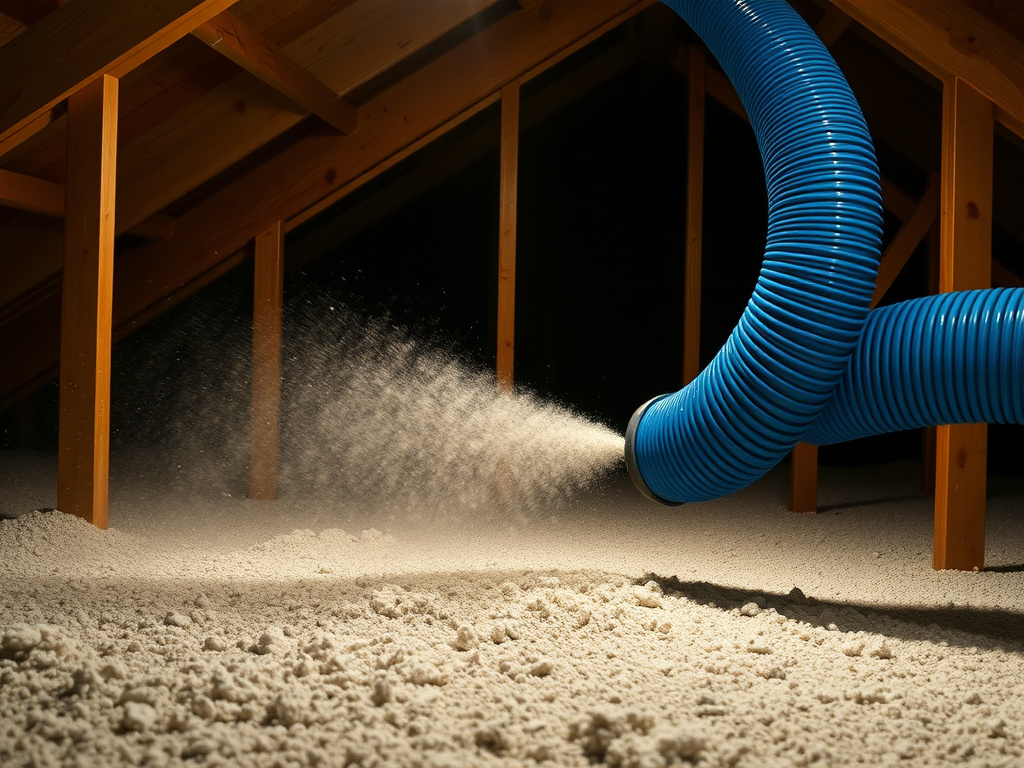
A lot of the housing stock across Northern Arizona predates today's energy codes by decades — Prescott's century-old Victorian-era downtown core, Williams' small Route 66 railroad-town homes, and Flagstaff's older ponderosa-pine-lot cabins were all built long before anyone was thinking about hitting a Zone 5B or Zone 4B R-value. Blown-in insulation is the practical fix for that gap because it doesn't require tearing a house apart to install. Loose-fill cellulose or fiberglass gets blown into an open attic floor in a single visit, or dense-packed into finished walls through small access holes, filling the cavity completely around wiring, framing, and awkward obstructions that batts can't wrap around cleanly.
We install both cellulose and fiberglass loose-fill depending on the application and your priorities. Cellulose is treated for fire and pest resistance, packs densely, and does a genuinely good job resisting drafts once it's settled into a cavity — a real advantage in wind-exposed Flagstaff, Williams, and Bellemont locations. Fiberglass loose-fill is lighter, non-combustible by nature, and often the more budget-friendly option for a straightforward attic top-up in a milder Prescott or Sedona home. Either way, the appeal is the same: real R-value improvement without opening up your ceilings or walls.
Why homeowners choose it
- Fills attic floors evenly around joists, wiring, and irregular framing
- Can be dense-packed into existing stud-bay walls through small access holes — no drywall demo
- Fast installation — most attics are completed in a single visit
- Cellulose option adds real draft resistance for wind-exposed high-country properties
- A cost-effective way to reach R-49 (Flagstaff/Williams) or R-38–49 (Prescott/Sedona) attic targets
- Ideal for topping up insulation that's settled or degraded over the years
Cellulose vs. fiberglass loose-fill across our service area
Both materials do the job, but they behave a little differently once they're in place. Cellulose is made from treated recycled paper fiber, packs to a denser fill, and does a noticeably good job cutting down on drafts as it settles into every gap in a cavity — a real advantage in a wind-exposed, high-elevation location like Flagstaff, Williams, or Bellemont. Fiberglass loose-fill is lighter, won't support combustion, and is often the lower-cost choice per square foot for a simple attic application in Prescott or Sedona's milder climate.
For most attic top-ups, either material gets you to the target R-value for your zone; the decision usually comes down to budget and whether draft resistance or cost efficiency matters more for your specific project. For dense-packed wall retrofits, we lean toward cellulose for its superior fill density in a fully enclosed cavity.
- Cellulose — denser fill, better draft resistance, treated for fire and pests
- Fiberglass — lighter, non-combustible, often lower cost per attic square foot
- Cellulose is our default recommendation for dense-packed wall retrofits
Dense-pack retrofit: insulating existing walls without demo
Plenty of homes around Prescott's historic districts and Flagstaff's older neighborhoods have exterior walls that were framed with little to no insulation, and ripping out drywall to fix that isn't something most homeowners want to sign up for — particularly on a property inside one of Prescott's local or National Register historic districts, where interior-only work like this generally doesn't trigger the exterior-focused review that a visible renovation would. Dense-pack blown-in insulation solves the problem without touching the exterior: we drill small access holes and blow cellulose into the stud cavity at a high enough density that it won't settle or leave gaps over time. Once each cavity is filled, the access holes are patched and the wall looks exactly like it did before we started.
It's one of the few genuine retrofit options for a wall that's been closed up for decades, and it's a common fix for the uninsulated additions and older sections found across Flagstaff, Williams, and Prescott's older housing stock.
When to top up vs. start over
Loose-fill insulation is durable, but it isn't immune to time. Older attics can show uneven depth from foot traffic, disturbed sections around vents and can lights, or general settling that leaves the R-value lower than it looks from a quick glance. We check the existing depth and condition before recommending anything — a straightforward top-up is often all that's needed, but if the old material is contaminated, wet, or badly disturbed, a full removal and re-insulation is the more honest recommendation.
Ideal for
- Older Flagstaff, Williams, and Prescott homes with original, settled attic insulation
- Prescott's historic-core Victorian and mid-century homes needing a wall insulation upgrade without opening drywall
- Attics with irregular framing, obstructions, or an uneven existing layer
- Budget-conscious upgrades that still need to hit the correct zone target for the town
- Rental and resale properties — including Flagstaff's NAU-area rental housing stock — that need a fast, affordable fix
What affects the cost
Blown-In Insulation questions, answered
Generally yes, per square foot, especially for a straightforward open attic. Spray foam costs more but adds an air seal in the same step; blown-in is the more budget-friendly path to hitting your target R-value when air-sealing is handled separately.
Yes — that's the main advantage of dense-pack blown-in. We drill small access holes, fill the cavity completely, and patch the holes when we're done, so there's no drywall demo involved. That's also a useful option for Prescott homes inside a historic district, since it doesn't touch the exterior.
Cellulose settles less than older loose-fill materials once installed correctly, and dense-packed walls are filled to a density specifically meant to resist settling. Attic applications can still show some settling over many years, which is why we check depth before recommending a top-up.
Both reach a similar R-value. Cellulose offers better draft resistance and is our usual pick for wall retrofits and wind-exposed Flagstaff/Williams properties; fiberglass is often the more budget-friendly choice for a simple attic top-up in a milder Prescott or Sedona home. We'll recommend based on your home, town, and budget.
Blown-In Insulation done right, by a local Northern Arizona crew
Blown-In Insulation isn't a commodity — the result depends entirely on how carefully it's planned and installed for your specific home and a genuine high-elevation Northern Arizona winter. We assess what your house actually needs, prep the space properly, and install to your target R-value, so the work delivers the comfort and heating savings it's supposed to. No shortcuts, no builder-grade rush.
We serve Flagstaff, Prescott, Prescott Valley, Sedona, Williams, and the surrounding Coconino and Yavapai County high country, and we'll help you check the UniSource Energy and local weatherization rebates that bring your project cost down. Every job starts with a free, no-pressure quote.
Just as important, we treat your home like the system it is. Insulation, attic ventilation, and air sealing all interact, and getting one right while ignoring the others leaves comfort and savings on the table. When we scope your blown-in insulation, we look at how it fits the whole picture — so the finished result performs the way it should, holds up through a real high-elevation winter, and actually lowers the heating bill you feel every month. That whole-home mindset, plus honest advice about what your house truly needs, is what our neighbors across Northern Arizona count on us for.
Free assessment
We evaluate your home and give you a clear, itemized quote with rebates factored in.
Expert install
We prep and install your blown-in insulation to spec — clean and on schedule.
Savings you can feel
A warmer home, lower heating bills, and help claiming every rebate you qualify for.
Related services
Ready for a free blown-in insulation quote?
Tell us about your home and we'll put together a clear, no-pressure quote — plus walk you through the weatherization rebates you may qualify for.