Local insulation from Flagstaff to Sedona
From alpine winters at 6,900 ft in Flagstaff and Williams to the milder high-desert nights of Prescott and Sedona, we insulate homes across a region that changes character every few thousand feet of elevation — and we tune every job to the town, the home's construction, and the real winter it has to survive. Here's where we work.
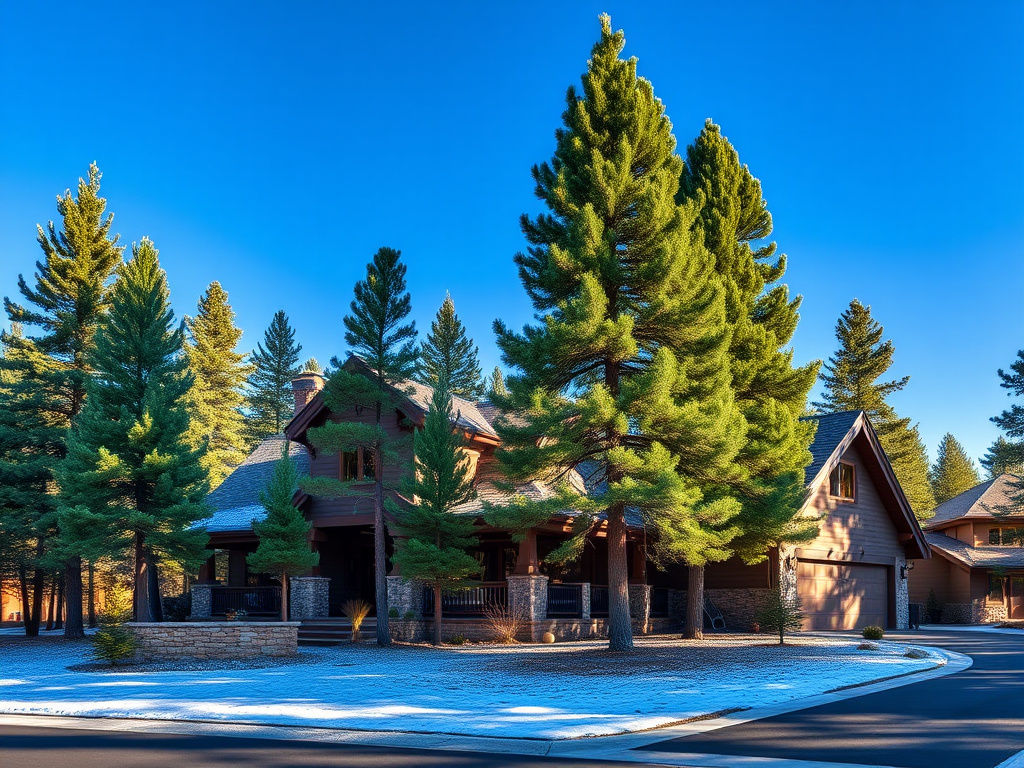
Towns we serve
Click through to a free quote for your home — wherever you are in Northern Arizona's high country.
Flagstaff, AZ
Our anchor city at roughly 6,910 ft — genuine Climate Zone 5B winters, ~81 inches of snow a year, and a housing mix of older ponderosa-pine-lot homes, NAU-area rentals, newer custom builds, and real log-cabin construction that all lose heat the same way: through an under-insulated attic and a leaky building envelope.
Free quote in FlagstaffPrescott, AZ
Yavapai County's seat at around 5,400 ft — milder than Flagstaff but still a real four-season Zone 4B climate, with a large stock of century-old Victorian-era homes downtown and mid-century ranch houses that were never insulated to a modern winter standard.
Free quote in PrescottPrescott Valley, AZ
The Quad Cities' largest community by population, with a newer mix of subdivisions and infill construction where builders and homeowners alike ask us for code-compliant Zone 4B attic and wall insulation on new work and retrofits alike.
Free quote in Prescott ValleySedona, AZ
Red Rock Country at roughly 4,500 ft — the mildest of our core towns, but still cold enough at night to matter, and home to one of Arizona's densest short-term rental markets, where under-insulated units mean guest comfort complaints and energy costs the owner never sees.
Free quote in SedonaWilliams, AZ
The Gateway to the Grand Canyon at nearly 6,750 ft — as cold and snowy in winter character as Flagstaff, with an older, smaller Route 66 housing stock that includes a real share of manufactured and mobile homes needing belly-wrap and skirting work.
Free quote in WilliamsChino Valley, AZ
North of Prescott with a mix of rural acreage properties, manufactured homes, and newer construction — many on propane or private well service, where insulation upgrades have a direct, visible impact on monthly heating costs.
Free quote in Chino ValleyCottonwood & the Verde Valley, AZ
Lower and milder than Prescott, climatically closer to Sedona than to Flagstaff — still worth a real attic and air-sealing upgrade for homes fighting cold nights and rising propane and electric costs.
Free quote in Cottonwood & the Verde ValleyBellemont, AZ
Just west of Flagstaff on I-40 — the same Zone 5B winter as Flagstaff proper, with a smaller, more rural housing stock that we serve on the same routes as our Flagstaff jobs.
Free quote in BellemontMunds Park, AZ
A mountain cabin community south of Flagstaff on I-17 with a large second-home population — a house that sits unheated for stretches between visits is exactly the kind of property where under-insulation turns into a frozen, burst pipe.
Free quote in Munds ParkKachina Village, AZ
A residential, commuter community just south of Flagstaff — genuinely cold, genuinely Zone 5B, and a strong candidate for attic and air-sealing retrofit work on homes built before current energy codes existed.
Free quote in Kachina VillageWhy a local Northern Arizona crew matters
Insulation isn't one-size-fits-all, and neither is Northern Arizona. Drive from Sedona to Flagstaff and you climb roughly 2,500 vertical feet and cross an entire climate zone in under an hour — Sedona's high-desert nights that dip into the mid-30s°F give way to Flagstaff's genuine alpine winters, where hard freezes run October through April and the town averages somewhere around 80-100 inches of snow a year. Williams, at nearly 6,750 ft, carries the same Zone 5B winter character as Flagstaff. Prescott and Sedona sit in the milder Zone 4B band, with real freezing nights but a shorter, gentler cold season. A crew that works this whole elevation gradient every week knows the difference between a Flagstaff attic that needs a full R-49 build-out and a Sedona property that needs a lighter, R-38-R-49 touch — and prices and specs the job accordingly instead of applying one template to every town.
The housing stock is just as varied as the climate. Flagstaff mixes older ponderosa-pine-lot homes with a dense ring of Northern Arizona University-area rentals, newer custom construction built under the city's wildfire-conscious building code, and a real population of log homes whose insulation performance is notoriously hard to judge from the outside. Prescott's downtown carries a genuine stock of century-old Victorian-era homes and mid-century ranch houses that were never built to a modern winter standard, alongside newer subdivisions in Prescott Valley and Chino Valley. Sedona skews toward short-term and vacation rental properties — guest-comfort complaints and energy costs on units the owner isn't there to notice drafts in are a distinct, recurring problem in that market. Williams keeps a smaller, older Route 66-era core with a real share of manufactured and mobile homes, and the same is true out toward Chino Valley and the rural stretches of both counties, where belly-wrap and skirting work is common. Munds Park and Bellemont add a second-home and cabin-community layer — houses that sit unheated for stretches between visits, which is exactly the kind of property where under-insulation turns into a frozen, burst pipe.
Every one of these towns shares the same underlying problem: a real winter that turns an under-insulated building envelope into a heat-loss machine and drives up propane, natural gas, or electric heating costs for months at a time. But the right fix looks different depending on where you are and what kind of home you own. A crew that treats Sedona like it's Flagstaff over-specs and overcharges; a crew that treats Flagstaff like it's Sedona leaves a home genuinely under-protected against ice dams and frozen pipes. We've worked across the whole region long enough to know which is which, and we spec every job — attic, walls, crawlspace, rim joists, skirting — to the actual elevation, climate zone, and construction type of the house in front of us.
Utility service varies by town too, and it changes what a rebate conversation looks like on your specific job. Flagstaff and Prescott both fall inside UniSource Energy Services' natural gas territory, and the City of Flagstaff runs its own weatherization rebate cycle on top of that — but a lot of the surrounding rural acreage in Chino Valley, Munds Park, and the unincorporated county land around Flagstaff and Williams runs on propane instead, with no city gas hookup to fall back on. That's a different cost equation, and it changes how we prioritize air sealing versus insulation depth on a given job. We keep track of which programs are actually funded and open in a given jurisdiction this year, rather than quoting a rebate figure that sounded right last season.
That's the advantage of hiring a crew that lives and works in Northern Arizona's high country instead of driving up from a low-desert metro: we already know how these homes behave in a real winter, we know which rebate programs are currently open in which jurisdiction, and we know how to make a Flagstaff cabin, a Prescott Victorian, and a Sedona rental all genuinely more comfortable and less expensive to heat.
Get your free insulation quote
Tell us about your home and we'll put together a clear, no-pressure quote — plus walk you through the weatherization rebates you may qualify for.