Attic Insulation in Northern Arizona
Attic insulation built to the target that actually matches your town — R-49 for Flagstaff and Williams, R-38–49 for Prescott and Sedona — the single biggest heat-loss fix in a Northern Arizona home.
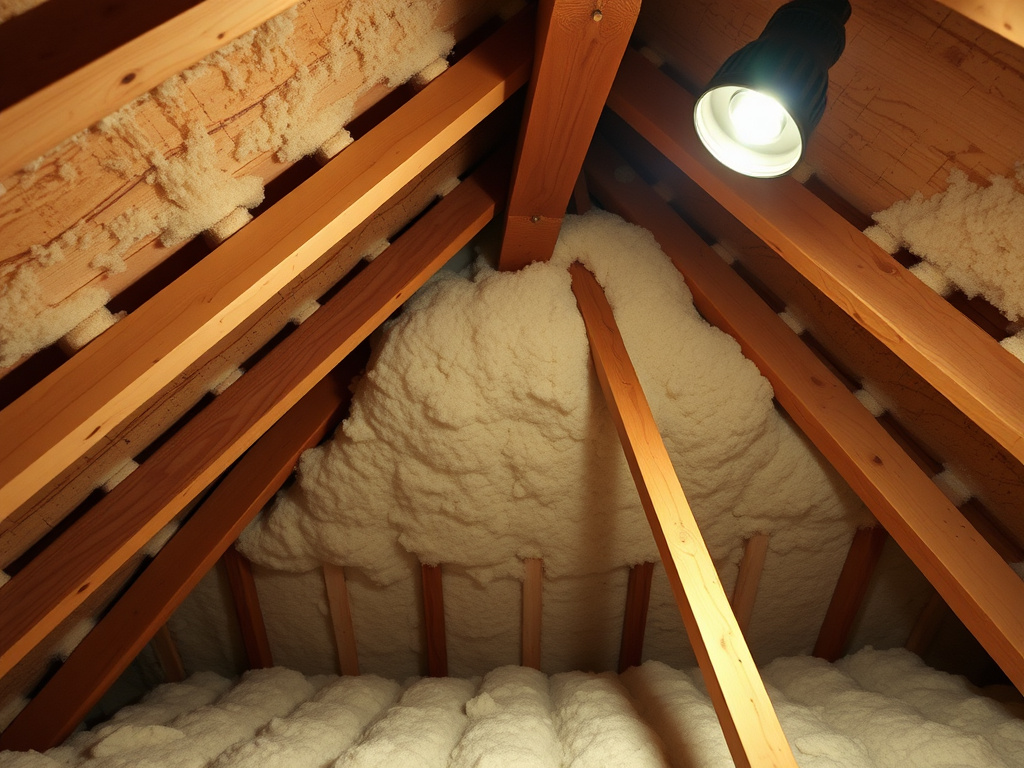
Heat rises, which makes your attic the single biggest opportunity for either savings or waste in any Northern Arizona home — but how much insulation you actually need depends heavily on which of our four towns you're in. Coconino County's high country, Flagstaff (~6,910 ft) and Williams (~6,750 ft), sits in genuine IECC Climate Zone 5B, which calls for roughly R-49 in the attic. Yavapai County's Prescott (~5,400 ft) and the lower, milder Sedona (~4,500 ft) fall in Zone 4B, where the recommended range is R-38 to R-49. Neither number is arbitrary — it reflects real differences in elevation, heating-degree days, and how long each town's furnace or heat pump actually has to run each winter.
Attic insulation is the umbrella fix for whichever gap your home has, and we deliver it with whichever method actually fits the attic — blown-in loose-fill, batt, spray foam at rim joists and hard-to-reach framing, or a combination. We start by measuring what's actually up there now, not guessing, because a lot of Flagstaff cabins, Prescott Victorians, and Williams Route 66-era homes were insulated to whatever standard was current decades ago — often well under either the R-49 or the R-38 mark for their zone.
Why homeowners choose it
- Targets the correct R-value for your specific town — R-49 in Flagstaff/Williams, R-38–49 in Prescott/Sedona
- Directly cuts the heat loss responsible for the largest share of a winter heating bill
- Reduces the attic heat leakage that causes ice dams at the eaves in the snowier towns
- Evens out the temperature swing between upstairs rooms and the rest of the house
- Works with the attic you already have — blown-in, batt, or spray foam depending on the space
- May qualify for UniSource Energy Services or City of Flagstaff weatherization rebates
Why the target isn't the same number in every town
Flagstaff and Williams sit in Zone 5B, and that zone calls for around R-49 in the attic — a number set for a place with a genuine, months-long heating season and real snow load, not the milder code you'd find in low-desert Arizona. Prescott and Sedona sit in Zone 4B, where R-38 to R-49 is the recommended range; Sedona's lower elevation and milder nights put it toward the lighter end of that range in many cases, while Prescott's colder nights and higher elevation often justify pushing toward the R-49 top end. We don't apply one blanket number across the whole service area — we recommend based on your specific town, elevation, and home.
Before we recommend anything, we get into the attic and measure the existing depth and condition directly. Sometimes that means topping up an already-decent layer to close the gap. Other times, especially in older homes in Prescott's historic core or Flagstaff's older neighborhoods, it means recognizing that what's up there has settled, compressed, or been disturbed enough that a full re-insulation makes more sense than adding on top of it.
- Flagstaff & Williams (Zone 5B): roughly R-49 attic target
- Prescott & Sedona (Zone 4B): roughly R-38 to R-49 attic target
- Zone 5B walls target roughly R-20, or R-13 plus continuous exterior insulation; Zone 4B walls run R-13–R-20
- We measure existing depth before recommending a top-up or full re-insulation
The attic-to-ice-dam connection in Flagstaff and Williams
In the snowier towns, a poorly insulated attic doesn't just cost you on the heating bill — it's usually the root cause of ice dams. Heat that escapes into the attic warms the underside of the roof deck unevenly, melting the snow sitting on top. That meltwater runs down to the colder eaves, where it refreezes into a dam that can back water up under your shingles. A properly insulated attic floor keeps that heat where it belongs — inside your living space — instead of leaking upward and turning your roof into an uneven melt-and-refreeze cycle.
Attic insulation is the first line of defense here, but it works best paired with balanced attic ventilation so the whole roof deck stays close to outdoor temperature. If ice dams or frozen pipes have already been a recurring problem at your property, our dedicated cold-climate service digs into that combination in more depth.
Blown-in, batt, or spray foam — matching the method to your attic
"Attic insulation" isn't one product — it's a category, and the right method depends on your attic's layout, access, and what's already up there. An open, walkable attic floor with standard joist spacing is usually the fastest and most cost-effective fit for blown-in loose-fill. Accessible, uniform joist bays can take batt insulation cleanly. Rim joists, vaulted sections, and tight or irregular framing — common in older Flagstaff log construction and Williams cabin-style homes — are where spray foam earns its higher cost.
If the existing insulation is wet, compressed, rodent-damaged, or otherwise not worth insulating over, we'll say so and recommend removal first rather than layering new material over a problem that's still there.
- Blown-in cellulose or fiberglass for open, accessible attic floors
- Batt insulation for uniform, accessible joist bays
- Spray foam for rim joists, vaulted ceilings, and hard-to-reach framing
- Removal recommended first if old insulation is wet, compressed, or contaminated
Ideal for
- Older Flagstaff cabins and Coconino County homes still running original, thin attic insulation
- Prescott's century-old Victorian-era homes and mid-century ranch houses never insulated to a modern standard
- Homeowners whose upstairs rooms never quite hold heat through a cold snap
- Homes in Flagstaff or Williams that formed ice dams or icicles at the roofline last winter
- Anyone watching their propane or electric heating bill climb year over year, in any of the four towns
What affects the cost
Attic Insulation questions, answered
Flagstaff sits in IECC Climate Zone 5B, which calls for roughly R-49 in the attic — meaningfully more than the R-19 to R-30 a lot of older Northern Arizona homes were originally insulated to.
A bit less, but still real. Prescott and Sedona sit in Zone 4B, where R-38 to R-49 is the recommended attic range, compared to roughly R-49 in Flagstaff and Williams' Zone 5B. Both zones are well above low-desert Phoenix-area targets — this is genuine cold-climate territory, just at two different intensities.
The only reliable way is to measure it directly. We get into the attic, check the depth and type of what's there now, and compare it against the correct target for your town before recommending a top-up, a full re-insulation, or nothing at all.
It's the biggest single factor, particularly relevant in Flagstaff and Williams. Ice dams form when attic heat loss melts roof snow unevenly, which refreezes at the colder eaves. A properly insulated, air-sealed attic keeps that heat inside the house instead of leaking up into the roof deck.
Most single-family attics are completed in a day. Larger homes, attics needing old insulation removed first, or jobs combining multiple insulation types can take longer — we'll give you a real timeline after seeing the attic.
Attic Insulation done right, by a local Northern Arizona crew
Attic Insulation isn't a commodity — the result depends entirely on how carefully it's planned and installed for your specific home and a genuine high-elevation Northern Arizona winter. We assess what your house actually needs, prep the space properly, and install to your target R-value, so the work delivers the comfort and heating savings it's supposed to. No shortcuts, no builder-grade rush.
We serve Flagstaff, Prescott, Prescott Valley, Sedona, Williams, and the surrounding Coconino and Yavapai County high country, and we'll help you check the UniSource Energy and local weatherization rebates that bring your project cost down. Every job starts with a free, no-pressure quote.
Just as important, we treat your home like the system it is. Insulation, attic ventilation, and air sealing all interact, and getting one right while ignoring the others leaves comfort and savings on the table. When we scope your attic insulation, we look at how it fits the whole picture — so the finished result performs the way it should, holds up through a real high-elevation winter, and actually lowers the heating bill you feel every month. That whole-home mindset, plus honest advice about what your house truly needs, is what our neighbors across Northern Arizona count on us for.
Free assessment
We evaluate your home and give you a clear, itemized quote with rebates factored in.
Expert install
We prep and install your attic insulation to spec — clean and on schedule.
Savings you can feel
A warmer home, lower heating bills, and help claiming every rebate you qualify for.
Related services
Ready for a free attic insulation quote?
Tell us about your home and we'll put together a clear, no-pressure quote — plus walk you through the weatherization rebates you may qualify for.